Exterior Painting Prep Process in Delaware: What Happens Before We Paint Your House
Most homeowners think exterior painting starts when the first coat of paint goes on. In reality, the most important part of any exterior painting project in Delaware is the preparation. Proper prep work is what makes paint last longer, look better, and hold up to Delaware’s humidity, salt air, rain, and temperature changes. If a contractor skips prep, the paint may look good at first, but it can peel, blister, or fade much sooner than expected. This guide explains the professional exterior painting prep process used on homes throughout New Castle County, Kent County, and Sussex County.Why Exterior Prep Work Matters in Delaware
Homes in Delaware face harsh weather conditions throughout the year. Coastal moisture, summer heat, winter freezing, and strong sun exposure all affect how well paint sticks to siding. Proper preparation removes dirt, chalking, peeling paint, and damaged wood so the new paint can bond correctly. Without this step, even the best exterior paint will fail early. If you want to understand how long paint should last locally, see our guide on how long exterior house paint lasts in Delaware.Step 1 – Pressure Washing the Exterior
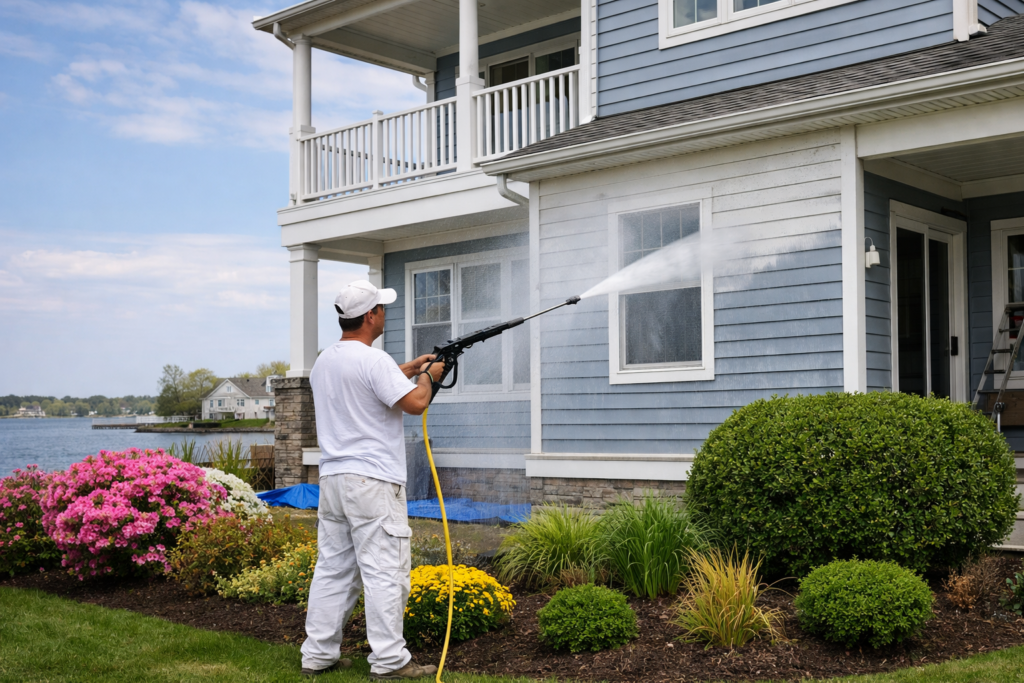
The first step in professional exterior painting is cleaning the entire house. This usually includes pressure washing siding, trim, soffits, and other surfaces. Pressure washing removes:- Dirt and mildew
- Chalking from old paint
- Loose paint
- Pollen and salt residue
Step 2 – Scraping and Removing Peeling Paint
After the house is clean and dry, loose paint must be removed. Professional painters scrape and sand all peeling areas so the new paint can bond to a solid surface. Skipping this step is one of the biggest reasons exterior paint fails early. If you are comparing estimates, this is one reason exterior painting prices can vary. Learn more in our Exterior Painting Cost in Delaware guide.Step 3 – Sanding and Surface Smoothing
Sanding helps create a smooth, even surface and improves adhesion. This is especially important on trim, doors, railings, and older wood siding. Professional sanding also helps the finished paint look cleaner and more uniform.Step 4 – Caulking and Sealing Gaps
Caulking seals joints, seams, and gaps around windows, doors, and trim. This step helps prevent water intrusion and improves the appearance of the finished job. In Delaware, sealing gaps is important because moisture can get behind siding and cause peeling or wood rot.Step 5 – Repairing Damaged Wood or Trim
Before painting, damaged wood should be repaired or replaced. Painting over rot or soft wood will not fix the problem and the paint will fail quickly. Common repairs include:- Replacing rotted trim
- Repairing fascia boards
- Fixing window sills
- Replacing loose siding
Step 6 – Priming Bare Wood and Repairs
Primer helps paint bond to the surface and provides a uniform base color. Any bare wood, repairs, or sanded areas should be primed before painting. Using the correct primer is especially important in Delaware’s climate, where moisture and temperature swings can cause paint to fail. If you want to learn which products hold up best locally, read our guide to the best exterior paint for houses in Delaware.Step 7 – Protecting Landscaping and Property
Before painting begins, professional crews protect landscaping, decks, walkways, and windows. This includes covering plants, masking surfaces, and using drop cloths. Proper protection keeps the job clean and prevents damage to the property.Step 8 – Final Inspection Before Painting
After prep is complete, the painter should inspect the entire house before applying paint. Any missed peeling areas, gaps, or repairs should be corrected before the first coat goes on. This step ensures the paint job lasts as long as possible.How Long Prep Takes on an Exterior Painting Project
Preparation often takes as long as the painting itself. On many Delaware homes, prep work can take one to three days depending on the size and condition of the house. Homes near the beach, older homes, and homes with peeling paint usually require more prep.Exterior Painting in Delaware Requires Proper Prep
A high-quality exterior paint job is mostly preparation. When the prep work is done correctly, paint lasts longer, looks better, and protects your home from Delaware weather. Paint Doctor has been painting homes throughout Delaware for over 20 years, and every project follows a detailed prep process to ensure long-lasting results. If you are planning to paint your home, you can request an estimate here: Exterior Painting Services in DelawareFrequently Asked Questions About Exterior Painting Prep in Delaware
How important is prep work before exterior painting?
Prep work is the most important part of exterior painting. Cleaning, scraping, sanding, and priming allow the paint to bond properly and last longer.Do all houses need pressure washing before painting?
Yes, most homes should be washed before painting to remove dirt, mildew, and chalking so the new paint adheres correctly.Should damaged wood be repaired before painting?
Yes, rotted or soft wood should be repaired or replaced before painting. Paint will not fix damaged wood.How long does exterior prep take?
Prep work can take one to three days on most Delaware homes, depending on size and condition.Why do cheap paint jobs fail quickly?
Cheap paint jobs often skip preparation steps, which causes peeling, blistering, and early paint failure.
Best Time to Paint Exterior in Delaware 2026 Guide for Homeowners
Best Time to Paint Exterior in Delaware (2026 Homeowner Guide) Painting the exterior of your home in Delaware requires the right weather conditions, the right
03/19/2026
No Comments
Best Exterior Paint for Houses in Delaware 2026 Guide for Homeowners
Best Exterior Paint for Houses in Delaware (2026 Guide for Homeowners) Choosing the best exterior paint for your home in Delaware is important because our
03/08/2026
No Comments

How Often Should You Paint Your House Exterior in Delaware?
How Often Should You Paint Your House Exterior in Delaware? Homeowners often ask how often they should paint the exterior of their house in Delaware.
03/06/2026
No Comments


