When the temperatures drop and Delaware’s air turns brisk, most homeowners assume painting season is over. Paint and cold weather don’t mix—right?
Not necessarily.
At Paint Doctor, our experienced crews know how to work with, not against, the challenges of winter. With the right products, prep, and timing, a winter paint job can look every bit as beautiful and durable as one done in July.
In this article, we’ll explain how temperature, humidity, and drying times affect paint performance—and how our professionals keep projects looking flawless even through Delaware’s chilly, damp months.
On This Page
How Cold Weather Affects Paint
Paint behaves very differently at 40°F than it does at 70°F. Every type—latex, acrylic, or oil-based—has a “sweet spot” for bonding and curing. Once temperatures dip below that range, paint thickens, drying slows, and adhesion weakens.
Temperature:
Most paints need at least 50°F to cure properly. Below that, resins can’t form a strong film, leading to cracking or peeling later.
Humidity:
Delaware’s winters bring plenty of moisture, especially near the coast. High humidity slows drying, which can cause sagging, blistering, or dust sticking to wet surfaces.
Surface Moisture:
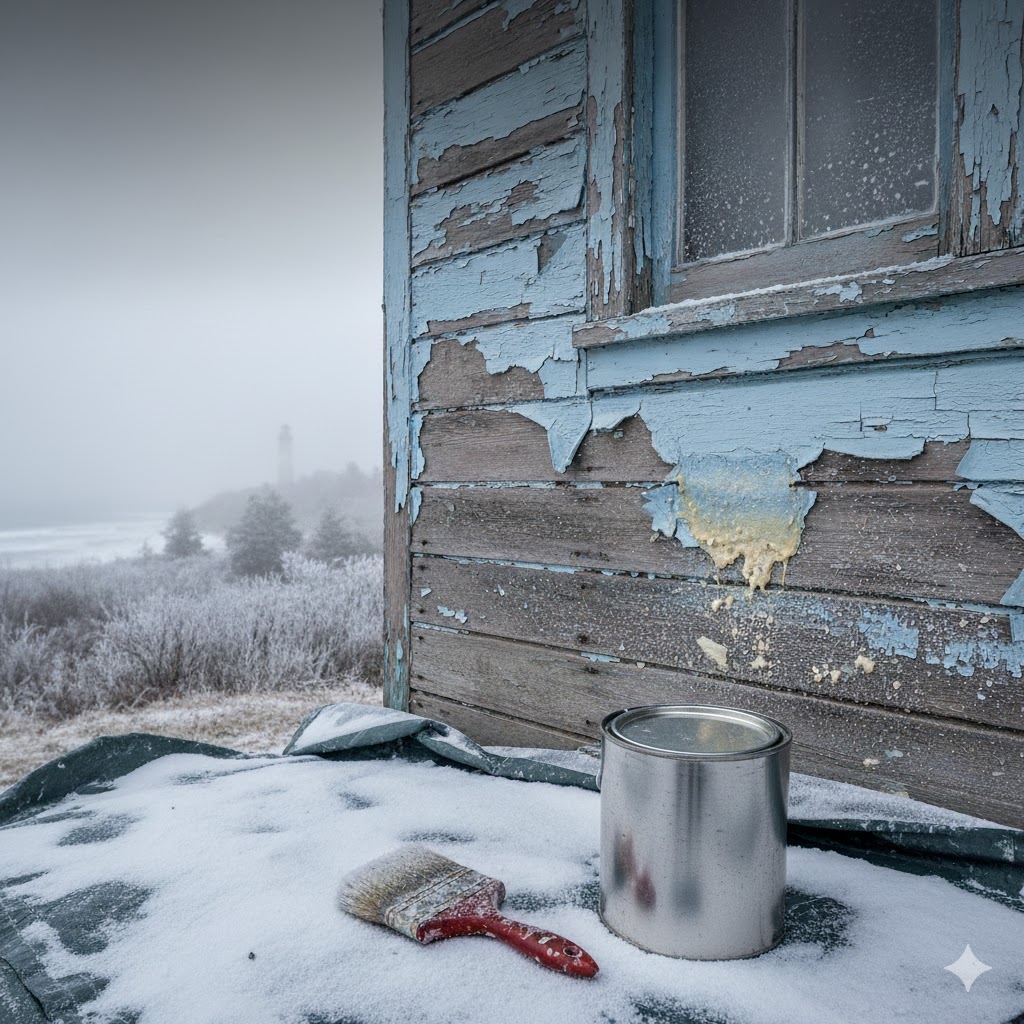
Even if the air feels fine, surfaces like siding or trim can hold condensation from overnight frost. That trapped moisture stops paint from adhering properly and can lead to early failure.
The result? A finish that looks great at first but fails within months—unless you have pros who understand how to paint smart in cold weather.
Ready to Love Your Walls Again?
Love your home again with fresh, professional color — start with a free estimate..


